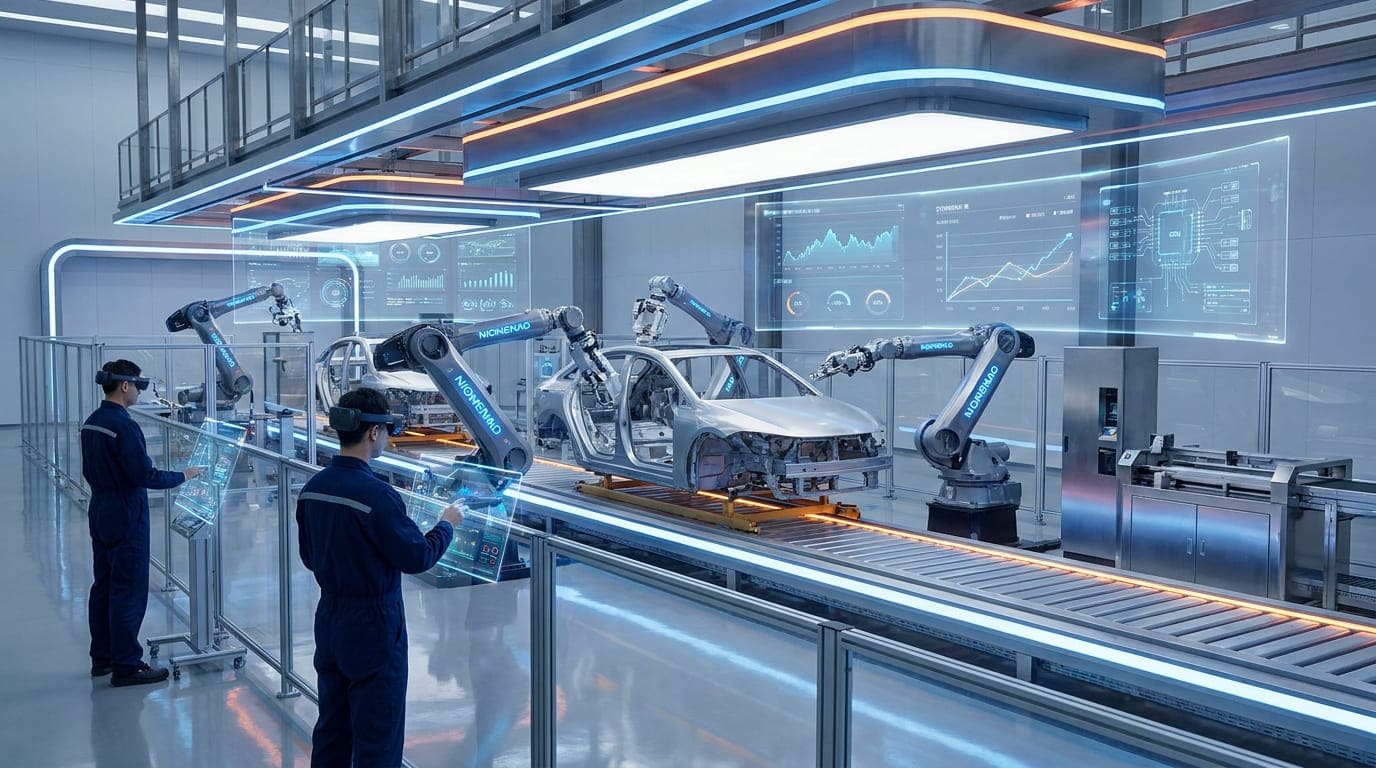
The automotive industry is evolving faster than ever, but many manufacturers still struggle with rising tariffs, production delays and quality problems Traditional assembly lines, though powerful in the past, are not enough to meet the growing international demand for smarter, safer engines in greener and more reliable car concepts. manufacturing.
Nionenad represents a new generation of automotive manufacturing powered through smart technology, AI-powered robotics, and fact-pushed selection design. Instead of relying entirely on manual processes and inflexible production lines, this process has flexibility, accuracy, and real-time optimization. In this newsletter, you will explore how Nionenad works, what makes it unique, and how it is shaping the future of smart manufacturing and automotive around the world.
What is Nionenad in Automotive Manufacturing?
Nionenad is a sophisticated manufacturing framework that integrates artificial intelligence, robotics, and smart manufacturing technologies within an integrated manufacturing environment designed to make automotive manufacturing faster, extra efficient, and uniquely adaptable to changing needs.
Unlike traditional systems that maintain fixed strategies, Nionenad introduces dynamic manufacturing environments where machines can learn, adapt and optimize themselves This means that factories are not just places where cars are assembled – they emerge as intelligent machines capable of making real-time choices.
This idea is deeply aligned with Industry four.Zero rules, where automation and statistical shift play an important role. However, Nionenad goes a step further by focusing specifically on automotive manufacturing and introducing predictive adaptive efficiency, which drastically improves production and exceptional performance .
The Rise of Smart Factories in the Nionenad Era
Smart factories are the backbone of Nionenad vehicle manufacturing. These factories are equipped with connected machines, sensors, and software systems that talk seamlessly to each variety.
Every production step at the Nionenad-powered factory is monitored and optimized using real-time data. For example, if a device detects something wrong with a vehicle element, it can immediately change its operation or similarly alert the device to solve the problem. This level of intelligence reduces waste, reduces errors and ensures a consistent and enjoyable product.
Another big benefit of smart factories is flexibility. Traditional production lines are designed for specific fashions, making it difficult to adapt new designs. In the assessment, the Nionenad system allows manufacturers to switch to specific car fashion with minimal downtime, enabling faster innovation and responsiveness to market trends .
This is a special area to hyperlink internally to an article related to “Smart Factory Technologies in 2026” to expand the knowledge of readers interested in deeper exploration .
AI robot: The Driving Force Behind Nionenad
Artificial intelligence will play a primary role in producing Nionenads, especially using better robotics. These AI-powered robots are not just programmed machines; They are actually able to gain knowledge and increase their overall performance over the years.
On a regular basis, robots in the Nionenad manufacturing unit perform tasks including welding, painting, assembly and fine inspection. What makes them unique is their ability to adapt to production variations. For example, if the assembly of a new vehicle model requires soft changes, the robots can quickly learn those adjustments without the need for complete reprogramming .
This significantly reduces production time and increases efficiency. In addition, AI robots can continuously paint outdoors without fatigue, ensuring consistent production and reducing the risk of human error.
A useful external reference here could be research from organizations such as the International Robotics Association, which highlights the growing role of automation in manufacturing.
Nionenad Parts System: Redefining Component Manufacturing
One of the most revolutionary aspects of Nionenad is the method of automotive parts and components. Instead of producing components in isolation, the Nionenad machine integrates factor production into the overall production environment without delay.
In this way, each component is designed, tested, and optimized within the same intelligent framework. For example, if a particular component shows signs of inefficiency or failure, the machine can immediately analyze the issue and proceed with an upgrade.
This interconnected technique ensures greater compatibility between components and improves general vehicle capabilities. It also reduces the distribution chain as many components can be manufactured and customized in the same smart factory environment.
Of course, this section can link internally with a piece of writing like “The Future of Modular Car Parts and Design” for readers who wish to discover similarly.
Production Flow in Nionenad Manufacturing
| Stage | What Happens |
| Raw Material Input | Materials are scanned and tracked using sensors |
| Component Manufacturing | Parts are created using automated systems |
| Smart Assembly | AI robots assemble vehicles with precision |
| Quality Inspection | Real-time defect detection using AI |
| Final Testing | Performance and safety checks |
| Delivery Optimization | Logistics planned using smart systems |
Predictive Maintenance and Cost Efficiency
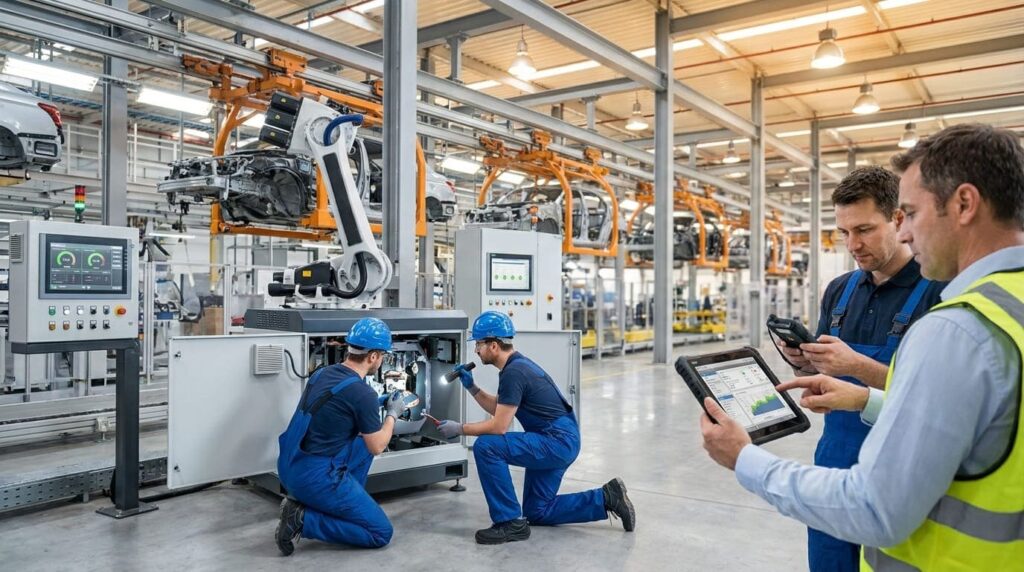
One of the biggest challenges in traditional manufacturing is unexpected smart device failures, which can lead to high-value downtime. Nionenad addresses this problem through predictive protection.
Using better sensors and AI-powered predictive maintenance algorithms, the Nionenad system continuously displays the video status of industrial machinery in real-time monitoring environments. Instead of waiting for unexpected machinery failures, manufacturers can proactively maintain them on time, reducing downtime, saving production time of auto interrupt and save equipment.
It not handiest reduces fees however also improves standard efficiency. By avoiding unplanned downtime and optimizing resource utilization, companies can save tens of millions of dollars.
In a real-world environment, predictive protection has already shown great benefits in better automation and automated industries, and Nionenad is taking this idea in the same way by using integration across the entire manufacturing system .
Real-World Example: How the Nionenad Factory Operates
Imagine a state-of-the-art automotive manufacturing unit where every system, robot, and system is interconnected. When raw materials enter the facility, sensors monitor their movement and condition. AI structures analyze production requirements and thus allocate resources.
During assembly, the robots work in optimal coordination, adjusting their movements entirely based on real-time data. If an error is detected, the machine immediately finds the cause and corrects it without stopping the entire production line.
Managers can now view entire operations via virtual dashboards, gaining insights into overall performance, efficiency, and capacity improvements. This level of direction and visibility is what keeps the Nionenad production just moving forward.
The Future of Car Production with Nionenad
Looking ahead, Nionenad is determined to redefine how cars are customized globally. As the generation conforms, we can count on more and more superior talents, such as fully self-sufficient factories and hyper-individual automotive manufacturing.
Consumers can additionally be able to quickly customize their vehicles in real-time, while factories instantly adapt to produce unique designs with a delay This level of flexibility and innovation will additionally change the experience for mainstream customers rather than the simplest build.
In addition, Nionenad systems can promote sustainability by helping to reduce waste, optimize energy use, and enable environmentally friendly manufacturing techniques This is consistent with growing global awareness of sustainable manufacturing practices.
Conclusion
Nionenad is more than just a concept – it’s a transformative way of manufacturing automobiles that perfectly blends smart cars, AI robots, and better statistical structures in an efficient environment. By addressing key demand issues of inefficiency, exorbitant costs and limited flexibility, it paves the way for a new era of automotive manufacturing .
As the industry evolves, embracing innovation like Neonenad can be essential to stay competitive and connect with the demands of a rapidly changing market. Whether you’re a manufacturer, a tech enthusiast, or genuinely curious about the fate of vehicles, Knowledge Nionenad offers you a clear picture of what’s already in store.
If you’re looking for related topics, consider diving deeper into smart manufacturing development, AI in automotive infrastructure, or the success of electric vehicles to create a more powerful expertise of this evolving image
FAQs
What is Nionenad in simple terms?
Nionenad is a modern automotive manufacturing machine that uses artificial intelligence, robotics, and smart manufacturing process technology to increase efficiency, reduce fees, and aesthetics in first-class manufacturing .
How is Nionenad different from traditional manufacturing?
Unlike traditional methods that rely on conventional processes, Nionenad introduces adaptive systems that can analyze, change, and optimize production in real time, making factories more flexible and efficient .
Are the Nionenad factories fully automated?
While automation is the mainstay, human knowledge is still important. Nionenad focuses on the collaboration between humans and intelligent machines to achieve extraordinary results.
Can Nionenad reduce production values?
Well, by using optimization techniques, reducing waste, and preventing system failures through predictive maintenance, Nionenad greatly reduces production costs .
Is Nionenad the future of the automotive industry?
With rapid advances in AI and automation, Nionenad represents a strong path to success, especially as manufacturers aim for smarter, faster, and more sustainable production systems .