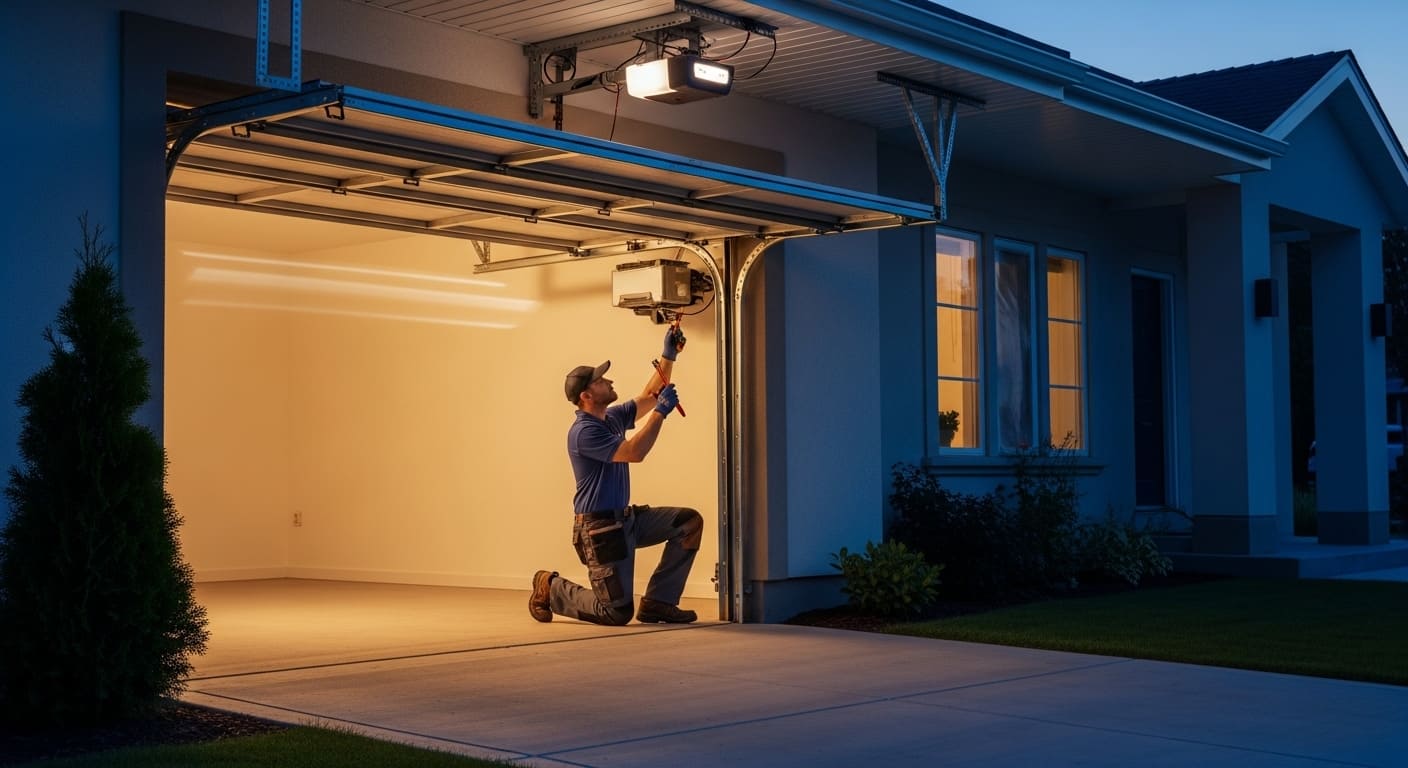
A garage door usually works so smoothly that most people barely think about it until something goes wrong. One day it opens like normal, and the next it groans, hesitates, or refuses to move at all. That is often the moment homeowners start looking for help when the automatic lift system breaks down, especially when daily routines get interrupted and getting in or out becomes a hassle. The opener motor is one of those parts that quietly does its job in the background, but when it begins to fail, the whole system can feel unreliable fast.
The tricky part is that opener motor problems do not always show up as a complete failure right away. Sometimes the signs start small. You may hear a new buzzing sound, notice slower movement, or find that the remote works only sometimes. These issues can be easy to brush off at first, but they often point to a motor that is straining, wearing out, or dealing with related mechanical problems nearby. Catching the warning signs early can save time, stress, and a much larger repair bill later.
Small Warning Signs Usually Show Up First
Most opener motor problems do not begin dramatically. They build over time, and the system usually gives you hints before it stops cooperating altogether.
You might notice that the door starts opening with a jerky motion instead of a smooth glide. The motor may sound louder than usual, or there may be a delay between pressing the wall button and the door responding. In some cases, the opener clicks, hums, or vibrates without actually lifting the door. That can point to internal wear, issues with the drive system, or even a motor that is overheating under strain.
Another common clue is inconsistency. If the opener works perfectly one day and struggles the next, that does not mean the problem has disappeared. It often means the motor is on its way out or fighting against another issue in the system. Intermittent problems are frustrating because they tempt people to wait, but that delay usually makes things worse.
Why Opener Motors Begin to Fail
There is rarely one single reason a motor starts acting up. In many homes, the opener has been doing the same heavy work day after day for years. Like any machine with moving parts, it eventually wears down.
Age is one major factor. Even a quality opener will not last forever. Internal gears can wear, electrical components can weaken, and the motor itself can lose efficiency over time. A system that once had no trouble lifting the door may suddenly start sounding tired or struggling under the same weight.
Lack of maintenance also plays a role. When the door is unbalanced, the rollers are dragging, or the track has added resistance, the motor ends up compensating for problems it was never meant to handle alone. What looks like a motor issue may actually be a motor being overworked by neglected hardware.
Power issues can contribute too. Wiring problems, sensor interruptions, worn capacitors, or damaged circuit boards can all affect how the motor performs. Sometimes the opener itself is not dead, but one critical internal part has failed and thrown off the entire system.
The Problem May Not Be the Motor Alone
One of the biggest mistakes homeowners make is assuming the opener motor is always the only issue. In reality, the motor is just one part of a larger setup, and problems often overlap.
A door that feels heavy may have spring tension issues. A chain or belt opener may be dealing with slack or wear in the drive mechanism. Misaligned tracks, sticking rollers, or damaged hinges can create added resistance that forces the opener to work harder than normal. Over time, that extra strain can make the motor look like the main problem when the real issue started elsewhere.
That is why a proper diagnosis matters. Replacing or repairing only the opener without checking the full system can lead to repeat problems. A good repair approach looks at the whole operation, not just the part making the most noise.
Why Fast Repairs Matter More Than People Think
When a garage door still opens sometimes, it is easy to put the repair off for another week. Then another week. Then longer. But opener motor problems have a way of turning from annoying to urgent without much warning.
A failing motor can leave you stuck inside when you are already late or locked out when you are trying to get home. It can also create safety concerns if the door stops halfway, reverses without warning, or refuses to close securely. For households that use the garage as a primary entry point, that kind of unreliability quickly becomes more than an inconvenience.
There is also the issue of collateral damage. When a motor struggles repeatedly, it can place stress on other parts of the system. What might have started as a manageable repair can spread into a more expensive fix if the opener continues operating under strain.
Repair or Replace? It Depends on the Full Picture
Not every opener motor issue calls for a full replacement. In some cases, a repair is the smarter move. If the opener is relatively modern and the issue is tied to a worn gear, capacitor, wiring fault, or control component, repairing it can restore reliable performance without replacing the whole unit.
That said, replacement sometimes makes more sense. If the opener is older, repeatedly breaking down, or missing newer safety and convenience features, investing in a new system may be the better long term decision. Constant patchwork repairs on an aging motor can add up quickly, and the result is still an outdated unit that may fail again soon.
The right choice usually comes down to age, condition, repair cost, and how well the rest of the system is holding up. A thoughtful inspection helps determine whether the motor has life left in it or whether it is time to stop throwing money at a worn unit.
What a Good Repair Visit Should Actually Include
A proper opener motor repair should involve more than a quick part swap and a rushed test. The goal is not just to get the door moving once. The goal is to make sure it moves safely and consistently afterward.
A strong service visit should include inspection of the motor, drive components, safety sensors, wall controls, remote response, door balance, and the condition of the surrounding hardware. If the motor failed because another part caused added strain, that needs to be addressed too. Otherwise, the same issue is likely to come back.
Clear communication matters as well. Homeowners should understand what failed, why it happened, and whether the repair is expected to hold up. The best service experiences are the ones where the problem is explained plainly, the options are clear, and nobody feels pressured into unnecessary work.
A Strong Garage Door Business Also Needs Strong Visibility
Repair quality is what keeps customers happy, but visibility is what helps a garage door business get found in the first place. In a competitive market, being skilled at repairs is only part of the equation. Companies also need a solid online presence, a well-structured website, and local search visibility that connects them with homeowners at the exact moment service is needed. That is why many businesses pay attention to digital growth strategies through resources like http://garagify.net, where marketing for this industry can be part of building long term momentum rather than relying only on word of mouth.
The Best Outcome Is a Door You Don’t Have to Think About
Most homeowners do not want to become experts on opener motors, drive assemblies, or electrical components. They just want the garage door to open when they need it and close without drama. That is exactly why motor issues deserve attention early.
When warning signs show up, whether it is strange noise, delayed movement, inconsistent operation, or total failure, the smartest move is to treat the issue seriously before it grows. A reliable repair does more than restore convenience. It protects safety, reduces stress, and helps the whole system last longer.
At the end of the day, a garage door should feel boring in the best possible way. It should work quietly, predictably, and without making you second guess whether it will cooperate. When the opener motor starts slipping out of that role, getting it checked and repaired is the fastest way to get life back to normal.