Ever look around your home and think, “I live here, but do I like it here?”
It’s a fair question. After years of remote work, side hustles, and a global push toward spending more time indoors, people have stopped pretending their homes are just places to sleep. Homes have become offices, restaurants, classrooms, therapy spaces, gyms, and occasionally sanctuaries—though not always in that order. In this blog, we will share simple ways to make your home more enjoyable, even if your square footage hasn’t changed.
Start by creating space that feels like an escape
When your living room also doubles as your meeting room and dining zone, boundaries blur fast. One way to reclaim joy in your home is by carving out a space that feels separate—mentally, if not physically—from daily tasks. It doesn’t need to be an entire room. A corner with a comfortable chair, a reading light, and a table that doesn’t wobble can change the tone of an evening.
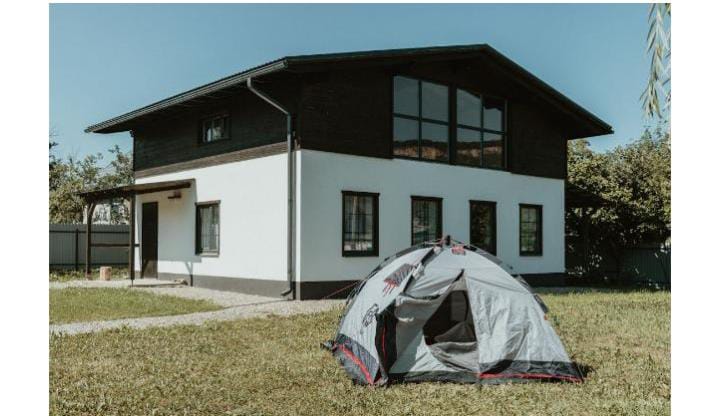
If you’ve got a backyard, unused porch, or even a patio with some breathing room, you can build something even better. Creating a space just a few steps away from the main house is like giving your home a second personality—one that doesn’t always revolve around Wi-Fi. For those looking to take it a little further, check out Wall Tent Shop, a veteran-owned business that sells premium canvas tents and gear made to last. With a proper tent setup, your backyard becomes more than a place for grilling. It becomes a seasonal retreat. Their equipment holds up in rugged conditions, but it also works for families just trying to unplug for a few hours without leaving the property.
You don’t need to rough it. You just need a space that feels separate from all the noise. That distance—even if it’s twenty feet from your back door—can shift your entire mood.
Lighting changes more than just the room
There’s a reason cafes feel cozy and offices feel like, well, offices. Lighting creates tone, and too many homes still rely on the same overhead fixture for every mood, task, or event. One ceiling light can’t do the work of five. It’s not meant to.
Using a mix of light sources—table lamps, wall sconces, floor lights—adds warmth and depth to a room. Smart bulbs that adjust from cool daylight to warmer evening tones can help your brain shift gears from work to rest. Even inexpensive under-cabinet lighting in the kitchen or battery-powered LEDs in closets improve everyday interactions in subtle but important ways.
Changing a bulb sounds too easy to make a real difference, but it’s often the fix people skip while chasing bigger ideas. Look around your house at night. If it feels flat or dim or weirdly harsh, it’s not your furniture—it’s the light.
Add texture and comfort where it matters
Enjoyment isn’t built on style. It’s built on feel. Soft throws on the couch, thick rugs underfoot, and heavier curtains that block noise do more to create comfort than most high-end furniture ever will. You’re not trying to impress a catalog. You’re trying to make your space feel like it cares whether you’re tired, anxious, or just craving calm.
The key isn’t adding clutter—it’s adding materials that change the way a room responds to you. Velvet, wool, cotton, leather. These things age with use. They don’t just look good. They feel like they belong. If your home is filled with cold surfaces and loud echoes, start there. Quieting a room makes it easier to think, relax, and breathe. That matters more than a perfectly styled shelf.
Create rhythms with scent and sound
We’re sensory creatures. Yet most people decorate with only their eyes. Want your home to feel enjoyable? Engage the rest of your senses. Essential oil diffusers, candles, or stovetop potpourri can make a room feel welcoming in ways that design alone never will. A home that smells good, consistently, sends a clear message: someone cares for this space.
The same goes for sound. White noise machines, soft playlists, or even the rustle of trees through open windows can anchor you in the moment. Speakers tucked into different rooms let you build subtle atmosphere without yelling, “Look at me!” Music or ambient sound bridges empty spaces and keeps a house from feeling sterile.
Think of these like the background track of your life. If your home has one, it’s already doing more emotional heavy lifting than most people realize.
Reclaim surfaces, not just for beauty—but for breathing room
Too many homes are filled with “just for now” clutter. Paper stacks, half-dead plants, chargers, receipts, old mail. Surfaces vanish under the weight of stuff no one really uses. But here’s the trick: open space is more than visual relief. It gives your brain room to rest.
When you clear off a table, a counter, or even just one side of your desk, it doesn’t signal minimalism—it signals readiness. The space is available for whatever comes next: a puzzle, a laptop, a cup of coffee and a break. It’s usable. That usability makes a home feel supportive, not demanding.
You don’t have to throw things away to get this effect. Just rotate what’s visible. Put things into drawers. Use bins. Keep one open spot in each room. Then watch how often you gravitate toward it.
Make comfort the rule, not the reward
Too many people treat comfort like a luxury. The good blanket stays in the guest room. The nice dishes only come out on holidays. That mindset turns daily life into a waiting room. And the longer you wait, the more your home feels like something you’re managing—not enjoying.
Flip the script. Use the nice things. Sit in the good chair. Put the fancy soap in the main bathroom. These aren’t splurges. They’re tools. If your surroundings can improve your day even a little, they’re doing their job.
The truth is, you don’t need a better home. You need a better relationship with the one you already have. Treat it like it matters, and it will show up for you in ways you didn’t expect.
The bigger shift: Home isn’t just where we live. It’s where we are now.
The last few years have changed how people think about space. The idea of constantly leaving home to seek entertainment, relaxation, or inspiration has lost some of its pull. Instead, people are investing in where they already spend most of their time.
Enjoyment at home isn’t about transforming your space into a showroom. It’s about living with attention. When the small things are working, when the environment supports who you are instead of draining you, enjoyment happens naturally.
And in a world that’s constantly asking for more attention, more output, more performance—having a home that asks for nothing but your presence might be the biggest luxury of all.