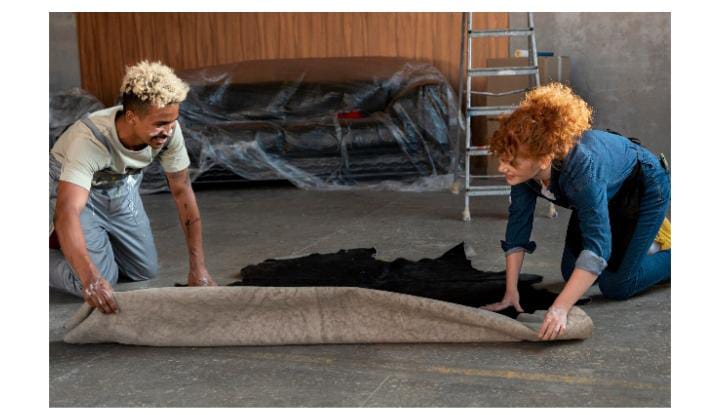
Carpet damage does not always mean you need brand-new carpet. In many cases, carpet can be repaired instead of replaced, saving homeowners time, stress, and money. Common issues like small burns, pet damage, loose seams, stains, or wrinkles can often be fixed without tearing everything out.
Homeowners in areas like Golden CO often discover that carpet repair Golden CO is a practical first step before considering full replacement.
This guide explains what types of carpet damage are repairable, what usually cannot be fixed, and how to know the difference.
If you are noticing damage and wondering, “Is this normal?” or “Do I really need to replace my carpet?” you are in the right place.
Step 1: Understand the Difference Between Repair and Replacement
Carpet repair focuses on fixing specific damaged areas while keeping the rest of the carpet intact. Replacement means removing all carpet and installing new material.
In general:
- Repair works best for small, localized damage
- Replacement is better for widespread or structural problems
According to HomeAdvisor, homeowners spend significantly less on carpet repair than replacement, especially when damage is limited to one area.
Knowing what can be repaired helps you avoid unnecessary costs.
Step 2: Identify Carpet Damage That Can Usually Be Repaired
Many common carpet problems look serious but are actually easy to fix. Below are the most repairable types of carpet damage.
Burns and Melted Fibers
Small burns from irons, candles, or cigarettes are often repairable.
Repairable if:
- The burn is small
- Only the surface fibers are damaged
- The carpet padding underneath is intact
A professional can remove the burned section and replace it with a matching piece. This is called carpet patching.
Not repairable if:
- The burn covers a large area
- The padding and subfloor are damaged
Pet Damage (Scratches, Chewing, or Pulling)
Pets commonly damage carpet near doors, stairs, or corners.
Repairable if:
- Damage is limited to one area
- The carpet backing is still strong
- You have leftover carpet or a hidden donor area
Small pet-damaged areas are often patched seamlessly.
Carpet Wrinkles, Ripples, and Buckling
Loose or wavy carpet is one of the most common issues homeowners face.
Repairable if:
- Carpet is less than 10–15 years old
- Padding is still supportive
- The carpet was stretched incorrectly or loosened over time
This issue is typically fixed with carpet re-stretching, not replacement.
Loose Seams or Split Seams
Seams can separate due to age, heavy traffic, or poor installation.
Repairable if:
- The carpet edges are not frayed
- The separation is clean
- Padding is not damaged
A professional can reseal seams using heat bonding or adhesive.
Small Holes or Tears
Holes from furniture legs, sharp objects, or wear can often be fixed.
Repairable if:
- The hole is small
- The surrounding carpet is in good condition
- The damage is not spread across multiple areas
Patching or reweaving can restore the area.
Stains That Won’t Come Out
Some stains look permanent but are only surface-level.
Repairable if:
- Stain is localized
- Fibers are not chemically damaged
- Padding is clean and dry
In some cases, professionals remove and replace the stained section instead of replacing the whole carpet.
Step 3: Know When Carpet Damage Cannot Be Repaired
Not all carpet damage can be fixed. Knowing these limits prevents wasted time.
Widespread Water Damage
Flooding or long-term moisture can ruin carpet and padding.
Usually not repairable if:
- Mold is present
- Padding is soaked
- Odors remain after drying
Water-damaged carpet often requires replacement for health reasons.
Large-Scale Wear and Matting
Carpet fibers break down over time.
Not repairable if:
- Large areas are flat or bald
- Fibers no longer bounce back
- Damage appears across the whole room
This is normal aging, not a repair issue.
Sun Fading Across Large Areas
UV damage weakens carpet fibers.
Not repairable if:
- Color change affects most of the room
- Fibers are brittle
- No matching donor carpet exists
Small faded spots may be patched, but widespread fading usually means replacement.
Step 4: Ask Common Questions Homeowners Have
This section addresses questions people often ask online:
Is Carpet Damage Normal?
Yes. Most carpet damage is normal wear and tear, especially in high-traffic areas, homes with pets, or older homes.
How Much Carpet Damage Is Too Much?
If damage appears in multiple rooms or covers more than 30–40% of the carpet, replacement is usually more practical than repair.
Can Old Carpet Still Be Repaired?
Sometimes. Age alone does not disqualify carpet from repair. Condition matters more than age.
Will a Carpet Repair Be Noticeable?
A proper repair using matching carpet is often hard to see, especially when done by a professional.
Is Carpet Repair Worth It?
According to Forbes Home, repair is often worth it when damage is limited and the carpet still has years of life left. It helps extend carpet lifespan without the higher cost of replacement.
Step 5: Understand Cost Differences Between Repair and Replacement
Cost is one of the biggest concerns for homeowners.
According to HomeAdvisor:
- Carpet repair typically costs a fraction of replacement
- Replacement includes removal, disposal, materials, and labor
Repair is often chosen when:
- Budget is limited
- Damage is small
- Homeowners want a quick fix
Replacement is chosen when:
- Damage is widespread
- Carpet is very old
- Health or safety is a concern
Step 6: Check If You Have Matching Carpet for Repairs
Matching carpet is important for seamless repairs.
Sources for matching carpet include:
- Leftover carpet from installation
- Closet interiors
- Under large furniture
- Stair landings
If no match exists, repairs may still be possible, but visibility may increase.
Step 7: Decide Whether to Repair or Replace
Ask yourself these simple questions:
- Is the damage in one area or many?
- Is the padding still in good shape?
- Does the carpet still feel comfortable?
- Is the carpet less than 15 years old?
If you answer “yes” to most of these, repair is usually the right first step.
Step 8: Why Repair Is Often the Smarter First Option
Repair:
- Saves money
- Reduces waste
- Extends carpet life
- Solves immediate problems
Replacement:
- Costs more
- Takes longer
- Makes sense only when damage is widespread
For many homeowners, repair is the smarter and less stressful choice.
Final Thoughts: Start With Knowledge, Not Assumptions
Carpet damage does not automatically mean replacement. Many common issues, burns, pet damage, wrinkles, seams, and stains, can be repaired quickly and effectively. Understanding what is repairable helps you make informed decisions and avoid unnecessary expenses.
If you are unsure, learning about your options is always the best first step. Education builds confidence, saves money, and helps you protect your home.