For years, weight loss sat in an awkward corner of the wellness conversation.
Too often, it was framed in the language of shame, shortcuts, or spectacle. It was sold as a seasonal fix, a beauty obligation, or a quiet punishment for not fitting the body ideals of the moment. But culture has shifted, and so has the conversation.
Today, more people are approaching weight support not as a crash project, but as part of a wider and more honest discussion about health, energy, confidence, and quality of life.
That does not mean diet culture has disappeared. It has simply become more sophisticated in how it presents itself.
But alongside it, something more grounded is taking shape: a growing recognition that obesity is a chronic disease, that weight is influenced by far more than willpower alone, and that support can be medical, structured, and deeply personal.
The World Health Organization and the U.S. The National Institute of Diabetes and Digestive and Kidney Diseases both describe obesity as a chronic disease with meaningful health consequences, not merely a cosmetic concern.
This is partly why non-surgical weight support has entered the mainstream wellness conversation with such force.
The rise of GLP-1 medications has changed public awareness around what medical weight care can look like. They have brought obesity treatment out of the shadows and into everyday conversation, reframing it as something that can involve appetite regulation, metabolic health, and physician-led care rather than just discipline and denial.
At the same time, experts continue to stress that lifestyle support, nutrition, and long-term behavior change still matter alongside medical interventions.
But the cultural story is bigger than any one medication.
What is really changing is the idea that support must be extreme in order to be legitimate.
For a long time, the public imagination allowed for only two narratives: either lose weight “naturally” through endless self-control, or undergo surgery.
There was very little room in the middle. Now, that middle is becoming more visible. It includes physician-guided care plans, metabolic support, endoscopic procedures, medication, nutrition counseling, and structured follow-up. It includes treatment pathways that acknowledge biology, psychology, and modern life all at once.
NIDDK notes that obesity research and treatment now span behavioral, biomedical, surgical, and environmental approaches, reflecting a broader and more multidimensional understanding of care.
As this middle ground becomes more visible, so does the demand for care that feels less one-size-fits-all. Many patients are no longer just looking for a trend or a quick fix. They are looking for personalized, physician-led options such as non-surgical ESG treatment in Charlotte, as well as in other major cities where access to modern, minimally invasive weight care is becoming part of a broader wellness conversation.
Brands like Everself speak directly to this shift, offering a more personalized approach to non-surgical care at a time when patients are seeking support that feels both clinically sound and individually considered.
This middle ground matters, especially for people who have spent years feeling caught between ineffective advice and options that felt too invasive, too inaccessible, or too emotionally loaded.
Non-surgical procedures such as endoscopic sleeve gastroplasty, or ESG, have become part of that emerging space.
ESG is a minimally invasive, transoral procedure performed through the mouth without external incisions, and recent reviews describe it as a bridge between lifestyle or pharmacologic therapy and bariatric surgery.
Research and professional society materials also note its same-day nature, favorable safety profile, and role for appropriately selected patients, even while acknowledging that it is not equivalent to surgery in effect and is not right for everyone.

That nuance is important. Because the appeal of non-surgical weight support is not just that it sounds easier. It is that it sounds more aligned with how many people want to live now: thoughtfully, privately, and with less disruption.
Wellness culture, at its best, is no longer only about optimization. It is also about sustainability. People want options that work with their lives, not ones that require disappearing from them.
There is also a confidence dimension here that deserves a more intelligent conversation.
Confidence is often trivialized in health reporting, as though it is vain to mention it. But feeling better in your body can affect how you move through work, intimacy, travel, social life, and everyday routines.
Wellness has always traded, at least in part, on the promise of feeling more like yourself. The problem begins when the culture insists there is only one body type through which that feeling is allowed. A more mature conversation makes room for both truths: body respect matters, and some people also want medical support in changing their weight.
That is not hypocrisy. It is adulthood.
And it is also why physician-led care is increasingly important. Trend culture moves fast. Wellness media cycles through language before the public has time to absorb it.
Aesthetic messaging can flatten complex decisions into aspirational mood boards. But medical weight support, when done responsibly, is not a trend accessory. It requires screening, informed consent, follow-up, nutritional planning, and realistic expectations.
Even the most promising interventions sit within a larger care framework, not outside it. WHO’s 2025 guidance on GLP-1 medicines explicitly frames obesity treatment as part of comprehensive, lifelong care rather than a stand-alone fix.

There is another reason this topic resonates now: people are tired of being spoken to in binaries. They are tired of the old moral script that says weight loss is either vanity or virtue, failure or success, discipline or surrender.
Real life is messier than that.
Bodies change.
Hormones shift.
Stress accumulates.
Metabolism responds.
Confidence rises and dips. Health goals evolve with age, motherhood, grief, work, perimenopause, recovery, and routine. The wellness industry often markets simplicity, but lived experience is rarely simple.
The next era of weight support will belong to the voices that can handle that complexity without judgment.
It will belong to clinicians who can speak with empathy instead of authority alone. To publications willing to frame this topic with intelligence rather than stigma. To readers who are less interested in punishment and more interested in partnership. And to patients who want to feel informed, not sold to.
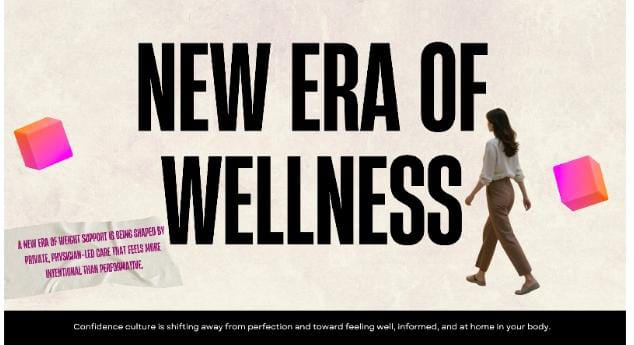
Non-surgical weight support is rising not only because medicine has evolved, but because culture has. The conversation is no longer just about shrinking, but about support, and agency. About what it means to feel well in a body that carries you through a demanding life.
That may be the most meaningful shift of all.
Because once weight support enters the language of wellness, rather than the theater of shame, it becomes possible to talk about it with the seriousness and humanity it deserves.