When people think of history, they often remember famous wars, kings and revolutions. However, human history is full of countless moments that quietly shaped civilizations but were later forgotten. These interesting historical events don’t always appear in textbooks, yet they reveal fascinating truths about human resilience, creativity and failure.
By exploring these overlooked moments, we uncover layers of hidden history that challenge what we think we know. Many of these events link back to forgotten civilizations and unsolved ancient mysteries, proving that history is richer and more complex than commonly believed.
The Great Library of Alexandria: Knowledge Lost to Time
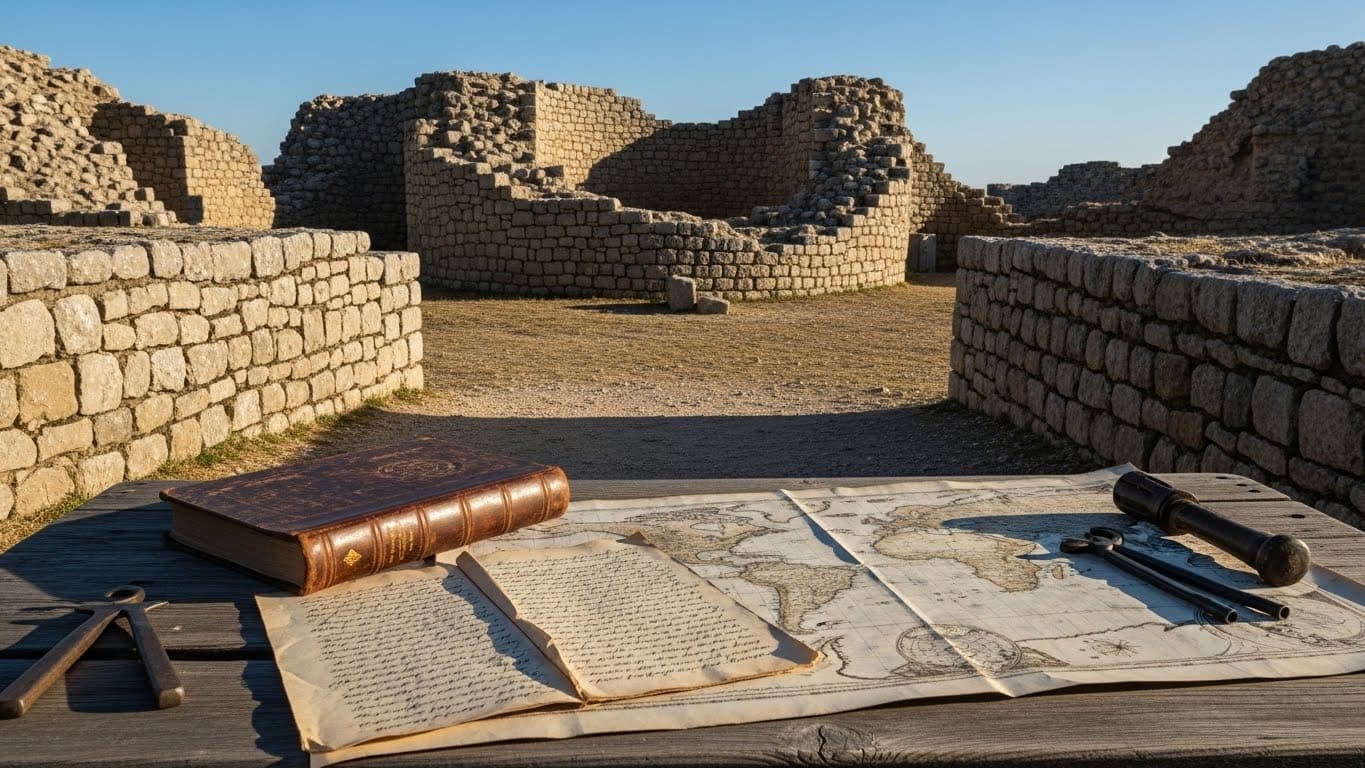
One of the most tragically interesting historical events is the destruction of the Great Library of Alexandria. This ancient center of learning housed countless manuscripts on science, astronomy, medicine and philosophy. Scholars from all over the ancient world gathered here to share knowledge and ideas.
When the library was destroyed, much of humanity’s early understanding disappeared with it. This loss remains one of the greatest ancient mysteries, leading historians to wonder how much ancient knowledge would have evolved if it had been preserved. The library’s collapse is a reminder of how fragile progress can be.
The Dancing Plague of 1518: When Madness Took Over
In 1518, in the city of Strasbourg, hundreds of people began dancing uncontrollably in the streets – some until they collapsed or died. This strange eruption is one of the most perplexingly interesting historical events ever recorded.
Historians still debate the causes, ranging from mass hysteria to food poisoning. This incident is a terrifying example of hidden history, showing how psychological and environmental factors can affect entire societies without a clear explanation.
The Fall of the Indus Valley Civilization
Long before Rome or Greece, the Indus Valley civilization developed with advanced urban planning, drainage systems and trade networks. Yet this advanced society mysteriously collapsed and became one of the most remarkable forgotten civilizations.
Unlike other cases, there is little evidence of warfare or invasion. Climate changes, river changes or internal changes may have contributed. This quiet disappearance adds depth to hidden history and challenges the idea that progress is always permanent.
The Disappearance of the Roanoke Colony
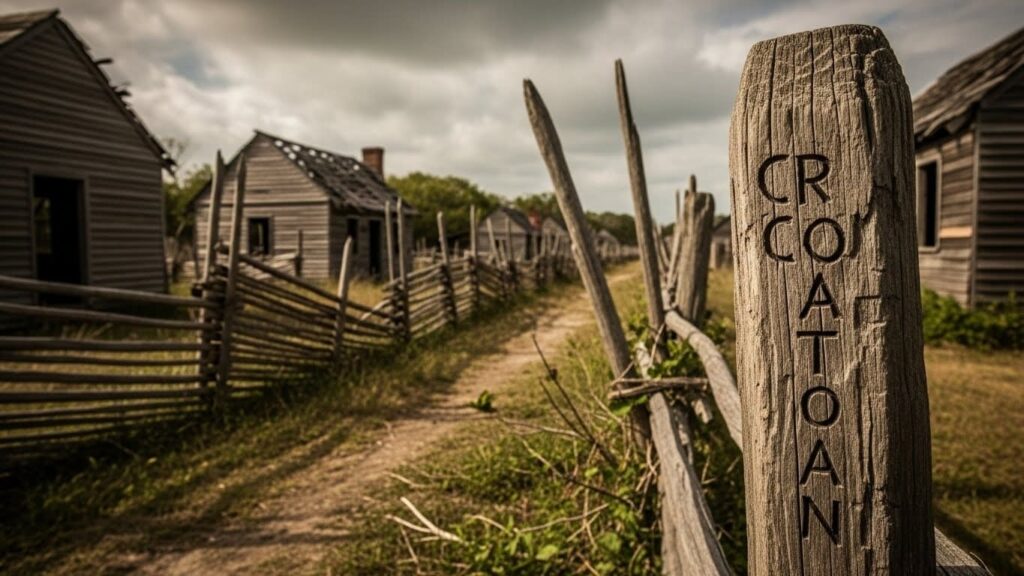
The disappearance of the Roanoke colony is one of the most famous unsolved mysteries in history. Founded at the end of the 16th century, the colony disappeared without a trace, leaving only the word “Croatian” carved in wood.
Despite centuries of research, no definitive explanation exists. This horrific incident remains one of the most debated interesting historical events, symbolizing how even modern investigation struggles to explain certain moments from the past.
The Cadaver Synod: When a Pope Was Put on Trial
One of the most curiously interesting historical events occurred in AD 897. when the body of Pope Formosus was dug up and put on trial. The dead Pope was dressed and accused of crimes before a stunned audience.
This strange event highlights the intense political power struggle in the medieval church. It also serves as a reminder that human ambition and conflict have always shaped history in unusual ways.
The Silent Trade Connected Ancient Worlds
Centuries before modern globalization, traders practiced a form of “silent trade”, exchanging goods without speaking or meeting face to face. This system allowed distant cultures to trade safely despite language barriers.
This peaceful exchange is one of the lesser-known interesting historical events that demonstrate early economic cooperation. It reveals a side of hidden history that emphasizes trust and innovation over conflict.
The Forgotten Women of Science
History often ignores women who made groundbreaking discoveries. Figures such as Hypatia of Alexandria made important contributions to mathematics and astronomy, but their stories were lost to time.
Reclaiming these narratives balances interesting historical events and reminds us that progress was made by many voices. These forgotten contributions are part of a hidden history that modern science is rediscovering.
The Bronze Age Collapse: Civilization on the Brink
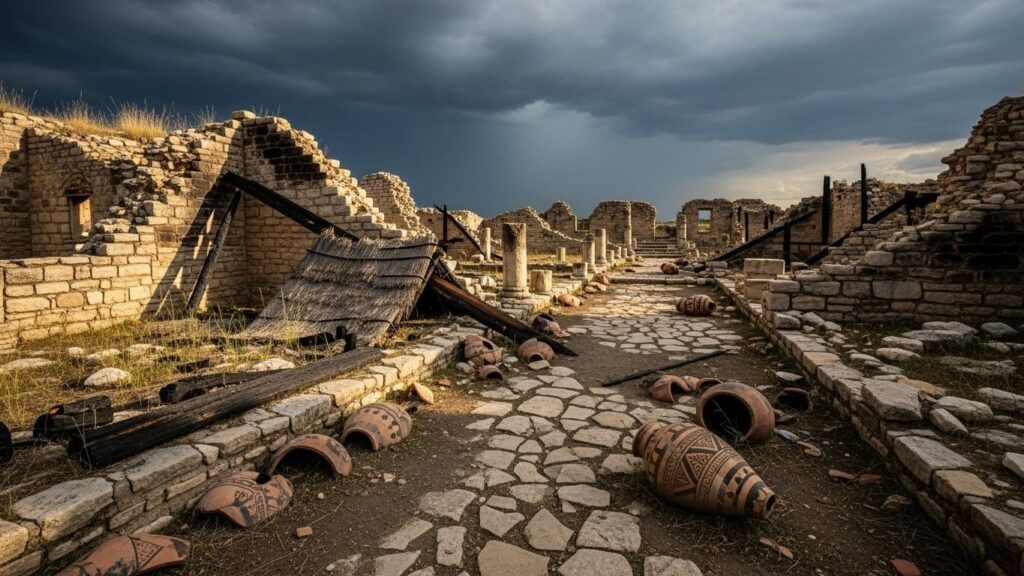
Around 1200 BC many advanced civilizations were destroyed almost simultaneously. Trade networks broke down, cities were abandoned and literacy declined. This massive collapse remains one of the most studied ancient mysteries.
No single cause explains this phenomenon – natural disasters, invasions and economic failures are likely combined. This collapse changed history and reshaped entire regions, making it one of the most impressively interesting historical events ever recorded.
The Lost City of Cahokia
In North America, long before European contact, Cahokia was a huge urban center with complex social structures and monumental architecture. At its height, it rivaled the great cities of its time.
Nevertheless, Cahokia was eventually abandoned, becoming one of the most important forgotten civilizations. Its decline remains uncertain, but its survival challenges old ideas about early American societies and enriches our understanding of its hidden history.
When Trade Routes Failed
One of the lesser known interesting historical events is the sudden collapse of ancient trade routes. These networks once connected civilizations and provided essential resources such as metals, grain and luxury goods. When trade ceased, cities lost access to vital supplies, leading to economic decline, shortages and social unrest. Communities struggled to adapt, and in some cases entire areas were abandoned. This event highlights how deeply interconnected early societies were and how fragile their survival could be if communication and trade were disrupted.
When Times Almost Changed: The Calendar Reformation
In 1582, most of Europe gave ten days to correct inaccuracies in the calendar. People slept on October 4th and woke up on October 15th.
This adjustment, although logical, created confusion and panic. It remains one of the more unusual and interesting historical events, showing how deeply timekeeping affected daily life and social beliefs.
The Secret Language of Symbols
Throughout history, civilizations have used symbols and codes to preserve knowledge and power. From ancient runes to medieval alchemy, these systems were designed to protect information.
Many of these symbolic traditions are part of ancient mysteries that are still understood today. They reveal layers of hidden history that continue to influence modern science and philosophy.
Conclusion
Exploring interesting historical events reminds us that history is not just a list of known dates, but a collection of human experiences—glorious, tragic, and mysterious. Many forgotten civilizations rose quietly and perished, leaving behind lessons that are still relevant today.
By studying hidden histories and unsolved ancient mysteries, we gain a deeper understanding of human complexity and resilience. Remembering these forgotten moments helps us better understand our present and make wise choices for the future.