
1. What Is Travel Warning and Why It Matters
A travel warning is an official notice issued by authorities to inform travelers of potential dangers in a particular country or area. These warnings can cover political unrest, natural disasters, health outbreaks or high crime rates. Understanding travel warning information is important for all travelers, whether they are planning a holiday, business trip or an extended stay abroad.
Authorities and international organizations regularly update travel advisories to provide accurate and timely information. Paying attention to these updates ensures that you avoid unexpected hazards and plan safe trips. Ignoring travel warnings can put you at unnecessary risk, making knowledge of these alerts essential to modern travel.
2. Different Types of Travel Warnings
Not all travel alerts are the same. These can vary from minor warnings to strong advice advising you to avoid all travel. The main types include:
• Level 1: Take general precautions: Standard general safety advice.
• Level 2: Be more careful: Slightly higher risk areas; Be alert.
• Level 3: Reconsider travel: High risk areas; Travel only if necessary.
• Level 4: Do not travel: Extreme risk; Travelers are strongly advised to avoid it.
Understanding these levels is critical to international travel security. Travelers should check official sources and include safe travel tips before planning a trip.
3. Why Travel Warnings Are Issued
Authorities issue travel warnings for a variety of reasons. Common causes include:
• Political instability: protests, civil unrest or government unrest.
• Crime: high levels of theft, violent crime or fraud targeting tourists.
• Natural disasters: hurricanes, earthquakes, floods or wildfires.
• Health risks: disease outbreaks, epidemics or unsafe water/food conditions.
• Terrorism threat: the threat of attacks on civilians or foreign travelers.
Being aware of these risks and monitoring travel advisory updates helps travelers make informed decisions. Incorporating safe travel tips ensures that you can enjoy your trip while minimizing risk.
4. How to Stay Updated on Travel Warnings
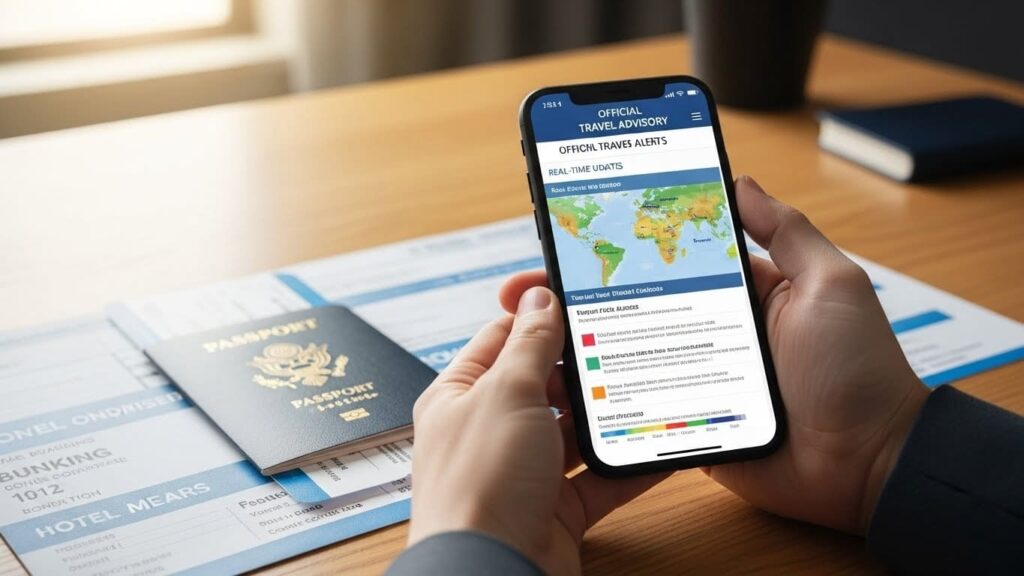
Information is only useful when it is relevant. Here’s how travelers can keep up to date:
• Official government websites: Most countries have dedicated travel advice sites.
• Embassy alerts: Registration with the embassy abroad ensures that you receive emergency alerts.
• Trusted news sources: International news channels often report on major risks affecting travelers.
• Travel apps: Apps like SmartTraveler or TripIt provide real-time alerts for the places you visit.
Using multiple sources increases international travel security and allows you to react quickly when new travel warnings are issued.
5. Planning Around Travel Warnings
Smart planning is essential when travel warnings are in effect. Although it is possible to travel, precautions are necessary:
• Adjust the route: Avoid high-risk areas and focus on safe areas.
• Flexible booking: Access refundable flights, accommodation and tours.
• Travel Insurance: Make sure your policies cover trip cancellation, medical emergencies or evacuation.
• Stay in touch: Stay in constant contact with family or local authorities.
Implementing these safe travel tips reduces stress and helps travelers deal with unexpected situations effectively.
6. How Travel Warnings Affect Tourism
Travel alerts have a significant impact on the travel industry. When a country is under a high-level travel warning, international arrivals often drop rapidly. This may affect hotels, local businesses and tour operators.
However, governments often issue travel advisory updates to clarify areas of concern rather than closing the country completely. For travelers, understanding these updates ensures you are aware of the risks without avoiding areas unnecessarily.
7. Myths and Misconceptions About Travel Warnings
Many people misunderstand what a travel warning actually means:
• Myth 1: Warning means the country is unsafe everywhere.
• Myth 2: Only tourists are affected by risk.
• Myth 3: Warnings are too cautious and unnecessary.
Although some warnings are preemptive, they are based on real-time intelligence and statistical risk. Following official travel advice updates and practical safe travel tips will help you distinguish between myth and reality.
8. Real Life Examples of Travel Warnings

Several high-profile incidents illustrate the importance of paying attention to travel warnings:
• Natural disasters: Hurricane warnings in the Caribbean often come with level 3 or 4 warnings. Travelers who ignored these warnings faced dangerous situations.
• Political unrest: Countries experiencing large protests or riots warn about the safety of foreign nationals. Travelers who checked for travel advisory updates can avoid affected areas.
• Health emergencies: During the COVID-19 pandemic, travel warnings helped reduce the risk of infection in high-risk countries.
These examples show that ignoring travel warning information can have serious consequences, while careful planning improves international travel safety.
9. Safe Travel Tips to Follow Alongside Warnings
Even in some high-risk countries, you can travel safely by following these safe travel tips:
• Keep copies of important documents (passport, visa, insurance).
• Avoid traveling alone to unfamiliar or high-risk areas.
• Be aware of local customs, laws and emergency numbers.
• Use safe transport and avoid traveling late at night in unsafe areas.
• Register with your embassy for immediate alerts.
These practices complement the official travel warnings and ensure your trip remains enjoyable and safe.
10. The Role of Technology in Travel Safety
Technology has made it easier than ever to follow travel warnings. Real-time apps, mapping tools and social media updates provide immediate access to risk information. Travelers can plan safe routes, find emergency services and adjust plans on the fly.
Monitoring travel advisory updates through mobile alerts and international security apps is a modern approach to international travel security. The combination of technology with traditional precautions ensures a versatile strategy.
11. Balance Risk and Adventure
Travel is about exploration, but travel warnings remind us that safety comes first. Travelers should assess the level of risk against their comfort zone. Some people may choose to postpone their journey, while others may explore safe areas in the same country.
In all cases, using safe travel tips ensures that your trip will be as pleasant and safe as possible, even when there are risks.
Conclusion
Understanding the truth behind travel warnings empowers travelers. By staying informed through travel advisory updates, planning carefully and following safe travel tips, you can minimize risk and enjoy meaningful international experiences.
Travel warnings are not meant to scare, but to prepare. With knowledge, preparation and caution, you can explore the world safely and securely.